PublicationFeb 1, 2016
From Conception to Refinement in Mechatronic Systems Engineering
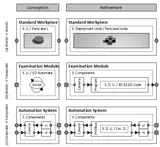
The complexity of mechatronic systems increases constantly due to market requirements. Traditional engineering approaches have troubles coping with the desired functionality. A major problem is the early and continuous integration and coordination of engineering disciplines (i.e. mechanic, electric, and software). To address this situation and to enable a concurrent engineering of participating disciplines, a model-based approach to early conception and subsequent refinement of mechatronic systems is proposed in this paper. This approach allows specifying a high-level mechatronic concept within a single editor and the refinement of this concept by integrating it with established engineering tools. In particular, the paper outlines the technical and methodical integration of discipline-specific tools such that refinement steps can be tested automatically and continuously. The suitability of the approach is shown along selected examples. Finally, the paper finishes with a reflection on the current state and an outlook on future research activities.
PublicationDec 13, 2015
Integrated Requirements and Systems Modeling in the Mechatronic Development Process
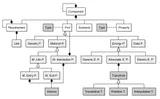
Manufacturing systems continuously increase in complexity due to higher customer expectations regarding their purpose and flexibility of use. In addition, the growing meaning of electronic and software components in manufacturing systems complicates the engineering since the interaction of different disciplines leads to increasing coordination efforts and problems regarding the interfaces between these disciplines. For these reasons, development processes in this context need to be adapted continuously to the present situation. To face these challenges, the suitable handling of arising requirements is one key factor for the success of engineering processes. Therefore, a modeling technique for an integrated requirements and systems modeling in the mechatronic development process is presented in this paper. After a summary of approaches for model-based development and requirements engineering in the context of mechatronic systems, the modeling technique is illustrated on a meta-model level. To demonstrate the feasibility, the proposed approach is applied to a miniaturized packaging machine, which is currently developed at the Institute for Machine Tools and Industrial Management (iwb) of Technische Universitaet Mueunchen for benchmarking engineering methods and tools. Excerpts of this application are outlined in this paper as well as the results of a discussion with experts from the machine tools industry regarding the presented modeling approach. Finally, an outlook with respect to possible enhancements of the modeling technique is given.
PublicationJul 2, 2014
A Multi-Disciplinary Modeling Technique for Requirements Management in Mechatronic Systems Engineering
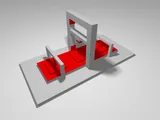
Machines and plants continuously increase in complexity due to higher customer expectations regarding their purpose and flexibility of use. For this reason, machines and plants development processes need to adapt continuously to the present situation. In addition, the growing meaning of electronic and software components in machines and plants complicates the engineering since the interaction of different disciplines leads to increasing coordination efforts and problems regarding the interface between these disciplines. To face these challenges, the suitable handling of arising requirements is one key factor for the success of engineering processes. Therefore, a multi-disciplinary modeling technique for requirements management is presented in this paper. After a summary of approaches for model-based development and requirements management in the context of mechatronic systems engineering, the modeling technique with its concepts, terms, tasks and workflows is illustrated. To demonstrate the feasibility of the proposed approach, the modeling technique was applied to a miniaturized packaging plant, which is currently developed at the Institute for Machine Tools and Industrial Management (iwb) of Technische Universität München for teaching students and benchmarking engineering methods and tools. Finally, an outlook with extensions of the concept for fault-tolerant systems and the integration of further engineering tools in order to promote a consistent engineering tool-chain is given.
PublicationNov 14, 2018
Test-driven conceptual design of cyber-physical manufacturing systems
Today, manufacturing system engineering companies face three major trends: First, the systems have to implement more functions and, hence, grow in complexity. Then, besides mechanical engineering discipline the electrical and software engineering disciplines contribute more and more to the functionality of the system and, hence, require increasing efforts. And finally, the integration of the components from the individual engineering disciplines has become a costly task taking up to 25% of the p...»
PublicationSep 30, 2015
Modellbasierte Konzeption von Benutzerschnittstellen im Entwicklungsprozess von mechatronischen Systemen
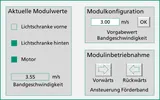
Aufgrund der juengsten Entwicklungen im Konsumgueterbereich ruecken Benutzerschnittstellen (HMIs) zunehmend in den Fokus des Maschinen- und Anlagenbaus. In etablierten Vorgehensmodellen der Entwicklung stellen HMIs jedoch lediglich ein Randthema dar, was die Realisierung intuitiver Bedienkonzepte erschwert. Vor diesem Hintergrund wird im folgenden Beitrag ein integrativer Entwicklungsansatz vorgestellt, der bereits in der fruehen Phase des Entwicklungsprozesses eine Konzeption von HMIs unterstuetzt. Dazu wird eine bestehende Modellierungstechnik zur Abbildung mechatronischer Systeme um HMI-relevante Elemente erweitert. Anhand eines industrienahen Fallbeispiels wird der Umgang mit dem neuen Entwicklungsansatz verdeutlicht sowie die praktische Anwendbarkeit evaluiert. Auf dieser Basis werden in einem Ausblick Potenziale zur Optimierung und Anpassung des Ansatzes abgeleitet.
PublicationNov 28, 2014
Interface Behavior Modeling for Automatic Verification of Industrial Automation Systems' Functional Conformance
To facilitate engineering and evolution of automation systems, ensuring the correctness of the design models is an important topic. Industrial automation systems are composed of various heterogeneous elements designed by different disciplines such as mechanical, electrical/electronic and software engineering. In this contribution, an approach for modeling industrial automation systems is presented which is based on interface behavior modeling of design artifacts and which supports automatic verification of their functional conformance while considering information from various disciplines.