PublicationJul 21, 2014
A Rapid Prototyping Approach for Smart Energy Systems Based on Partial System Models
A key success factor for building smart control software for today's energy systems is a precise understanding of their behavioral requirements. However, current engineering approaches lack the possibility to validate these requirements in early phases of development. The validation is hampered by the difficulty estimating the impact of requirements on the overall system behavior before a complete system model is built. To overcome this situation, we propose a model-based rapid prototyping approach based on partial system models enabling early validation of behavioral requirements through tool-supported behavior estimation. For evaluating the approach we demonstrate our approach through a case study showing the interaction between customer and software engineer over three iterations. Finally, the approach is discussed with respect to modeling effort and required model resolution.
PublicationJun 3, 2012
Applying formal software engineering techniques to smart grids
Engineering complex systems that have to meet critical requirements is a difficult task, especially if multiple engineering disciplines are involved. Common practice in domains like the automotive or avionic industry shows that formal methods improve engineering process efficiency for embedded software due to abilities like abstraction, early verification and iterative refinement. This paper presents how existing formal software engineering methods can be adapted to meet the needs of the smart grid domain. A case study demonstrates how we develop a basic interdisciplinary but semantically integrated decomposition of a household including electric and software behavior. Finally, we provide first simulation results to evaluate the feasibility of the model as well as the presented engineering method.
PublicationNov 1, 2016
The TRANSP-0 framework for integrated transportation and power system design
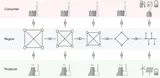
Increasing penetration of decentralized energy production as well as the propagation of new transportation paradigms such as transportation electrification, autonomous vehicles and mobility-on-demand will require interrelated key changes to current transportation and power systems. To diminish negative environmental impacts and achieve longterm sustainability, close integration between transportation and power systems is necessary and integrated planning, operation and control strategies have to be established. In this paper, we present TRANSP-0, a system design framework for rapid formulation and evaluation of design options within integrated transportation and power systems. Firstly, we present the TRANSP-0 design space in terms of the static parameters for integrated subsystem design. Secondly, we visit the dynamic properties of subsystem design by formulating the underlying optimal control problem. Thirdly, we establish the requirements to integrated control strategies in terms of objectives and constraints of the described optimal control problem. Finally, we conclude with an outlook on the future scope of the proposed system design framework.
PublicationOct 19, 2015
Integrated transportation and power system modeling
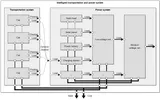
Undesired impacts on the power system caused by electric vehicles (EVs) remain a major challenge that needs to be addressed to guarantee their safe widespread adaption. In this context, efficiently balancing power demand power grids represents a fundamental issue of vehicle-to-grid (V2G) applications of EV. Here, existing approaches cover only a limited set of features required to achieve integrated multi-objective transportation and power system modeling. In this paper, we investigate an approach for holistic and integrated modeling of transportation systems and electric networks, covering electric devices within the power system and individual cars on the traffic network which make up the transportation system. The approach allows for rapid variation and evaluation of scenarios of both transportation systems and electric networks by varying their configuration, composition and underlying objectives. We apply our approach to different incremental small-scale V2G example scenarios. Obtained simulation results show the feasibility of the approach in terms of the employed modeling technique. Based on simulation results, we conclude with an evaluation of our approach with respect to it's validity, novelty, efficiency and applicability.
PublicationOct 1, 2014
Towards Early Emergent Property Understanding: Merging Behavior Space Exploration and Model-based Software Engineering
During early phases of complex systems engineering typically many structural and behavioral aspects are unclear. In particular, when it comes to constraints on the result of interactions between distributed components (emergent properties) current software engineering approaches provide limited support. Therefore, we propose an extension to current software models for describing the goals of interaction rather than the underlying decision logic. Further, we propose a generic algorithm for obtaining goal-oriented behavior. Finally, the concepts are evaluated in a case study.
ProjectJul 31, 2024
Smart Systems IDE
An integrated development environment and dynamic optimization framework for modeling objective functions, behavior spaces, and automated optimal control in smart systems.