PostOct 1, 2015
Integrated transportation and power systems modeling
Here is another interesting piece of work I was doing over the past three years with Dominik Ascher: Integrated transportation and power systems modeling to hel...
ProjectJun 6, 2023
Transport IDE: Intelligent Traffic Simulation
A modern Java- and JavaFX-based Intelligent Transportation Systems (ITS) modeling, discrete-event simulation, and control strategy optimization workbench.
PublicationFeb 26, 2025
Next-Generation Design Tools for Intelligent Transportation Systems.
Intelligent Transportation Systems (ITS) promote new transportation paradigms such as connected and autonomous vehicles (CAV), multi-modal and demand-responsive transport systems, and enable the transportation electrification by sustainable operation of electric vehicles. Methods and tools are needed to explore the possible design space for emerging transportation paradigms, which support evaluation of system design alternatives and verification of system properties. In this work, we propose a model-and simulation-based systems engineering framework for capturing design decisions and evaluating control strategies for ITS design. In addition to capturing and evaluating different design decisions, the proposed solution allows users to guide design decisions by systematic comparison and evaluation of system configurations and control strategies.
PublicationJun 26, 2017
The passenger extension of the TRANSP-0 system design framework
In recent years, potentially disruptive transportation paradigms such as mobility-on-demand, autonomous vehicles and the transportation electrification have seen increased attention for designing intelligent transportation systems (ITS). These paradigms represent unifying approaches in addressing sustainable alignment between transportation demand and supply in the context of rising world passenger transport energy use and increasing negative environmental impacts. It is crucial to establish integrated planning and control strategies for both transportation and power systems, as the aforementioned paradigms exert interrelated and concurrent effects on these systems. To evaluate future transportation and power system design options coherently and explore the potential effects of the aforementioned paradigms, in this work, we extend the design space of a formal system design framework for integrated …
PublicationNov 1, 2016
The TRANSP-0 framework for integrated transportation and power system design
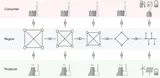
Increasing penetration of decentralized energy production as well as the propagation of new transportation paradigms such as transportation electrification, autonomous vehicles and mobility-on-demand will require interrelated key changes to current transportation and power systems. To diminish negative environmental impacts and achieve longterm sustainability, close integration between transportation and power systems is necessary and integrated planning, operation and control strategies have to be established. In this paper, we present TRANSP-0, a system design framework for rapid formulation and evaluation of design options within integrated transportation and power systems. Firstly, we present the TRANSP-0 design space in terms of the static parameters for integrated subsystem design. Secondly, we visit the dynamic properties of subsystem design by formulating the underlying optimal control problem. Thirdly, we establish the requirements to integrated control strategies in terms of objectives and constraints of the described optimal control problem. Finally, we conclude with an outlook on the future scope of the proposed system design framework.
PublicationOct 19, 2015
Integrated transportation and power system modeling
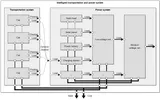
Undesired impacts on the power system caused by electric vehicles (EVs) remain a major challenge that needs to be addressed to guarantee their safe widespread adaption. In this context, efficiently balancing power demand power grids represents a fundamental issue of vehicle-to-grid (V2G) applications of EV. Here, existing approaches cover only a limited set of features required to achieve integrated multi-objective transportation and power system modeling. In this paper, we investigate an approach for holistic and integrated modeling of transportation systems and electric networks, covering electric devices within the power system and individual cars on the traffic network which make up the transportation system. The approach allows for rapid variation and evaluation of scenarios of both transportation systems and electric networks by varying their configuration, composition and underlying objectives. We apply our approach to different incremental small-scale V2G example scenarios. Obtained simulation results show the feasibility of the approach in terms of the employed modeling technique. Based on simulation results, we conclude with an evaluation of our approach with respect to it's validity, novelty, efficiency and applicability.