•12 min read
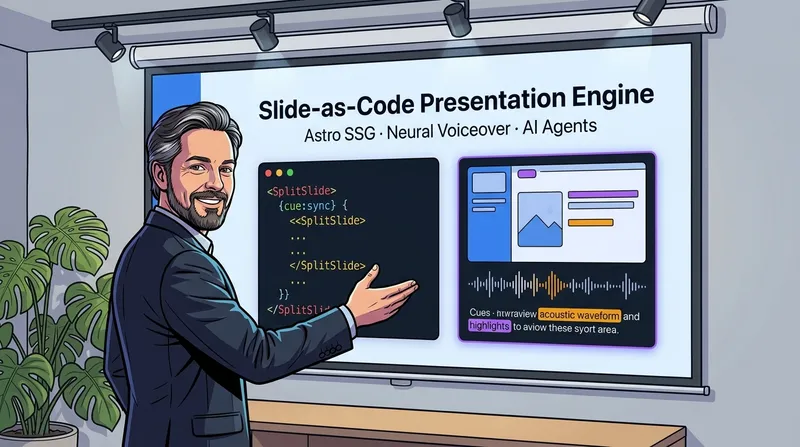
Slide-as-Code: Interaktive Präsentationen mit Astro
Wie wir eine maßgeschneiderte Slide-as-Code Presentation Engine mit synchronisiertem Neural-Voiceover, Astro-Integration und KI-Agenten-Workflows bauten.
Publicly accessible software source code enabling transparent inspection, collaborative community contribution, and sovereign deployment.
Wie wir eine maßgeschneiderte Slide-as-Code Presentation Engine mit synchronisiertem Neural-Voiceover, Astro-Integration und KI-Agenten-Workflows bauten.
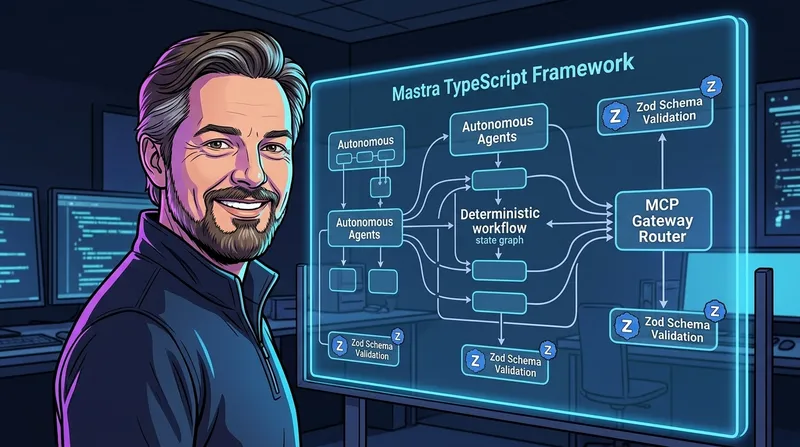
Tiefgehende Architekturanalyse des Mastra-Frameworks: Typsichere Workflows, RAG-Pipelines, Tool-Calling und deterministische KI-Agenten in TypeScript.
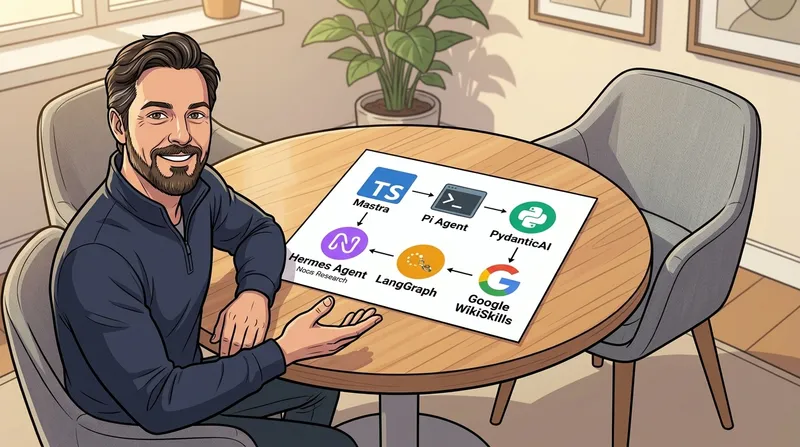
Wie lässt sich das WikiSkill-Paradigma (Inference → Tracing → Wiki Maintenance → Skill Synthesis → Gating) in Software gießen? Ein fundierter Technologie- und Architektur-Vergleich zwischen Mastra, Pi Agent, PydanticAI, Hermes Agent und LangGraph für Web-, CLI- und Enterprise-Ökosysteme.

Eine softwaretechnische Vergleichsanalyse: Die pragmatische Runtime-Kuratierung des Hermes Agent trifft auf die formale 3-Schichten-Entkopplung von Google WikiSkills. Wie sich Optimization Amnesia, Progressive Disclosure und Continuous Learning in modernen Enterprise-Architekturen vereinen lassen.
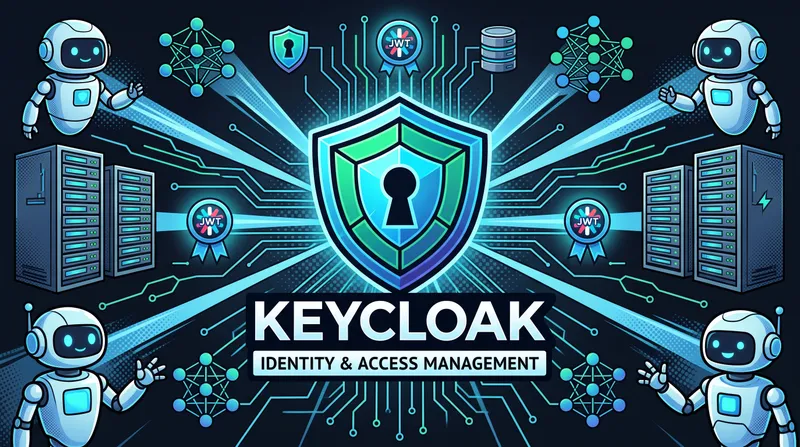
Softwaretechnische Analyse von Keycloak: Cloud-native Quarkus-Laufzeit, Token Exchange (RFC 8693) für KI-Agenten, UMA 2.0 und Zero-Trust-Governance.
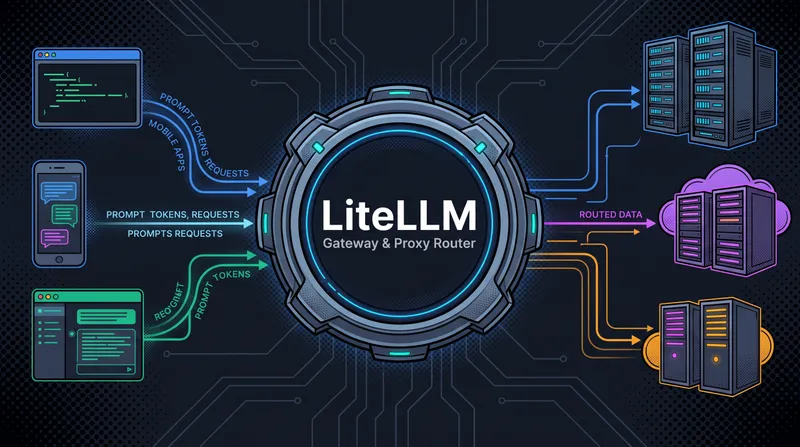
Eine softwaretechnische Tiefenanalyse von LiteLLM: Wie die universelle Abstraktionsschicht 100+ LLMs vereinheitlicht, wie intelligentes Routing und kaskadierende Fallbacks Ausfallsicherheit garantieren, warum Multilevel-Caching Latenzen minimiert und wie Enterprise-Governance via Keycloak und Virtual Keys funktioniert.
Georg Hackenberg, Christian Zehetner and Dominik Frühwirth
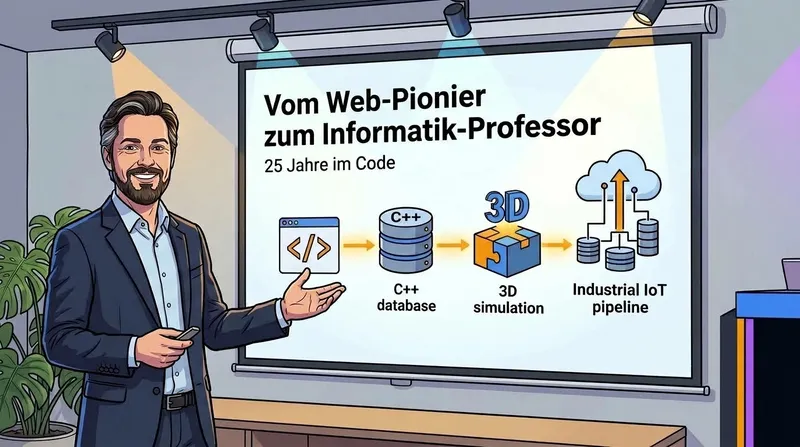
Mein Weg zwischen autodidaktischen Web-Ursprüngen, Spitzenforschung, Industrie-Leadership und Hochschullehre
Motivation, Content-Strategie und technische Umsetzung interaktiver Web-Keynotes mit Neural-Voiceover
CADdrive is a web-based, collaborative product design platform for schools and universities, lowering the learning curve for CAD and team engineering.
A Python toolkit designed to optimize factory layout planning (FLP) and job shop scheduling (JSS) through advanced layout modeling and simulation.
Open-source framework translating natural language prompts into structured LDraw CAD models and voxel assemblies using LangChain agents and LangGraph workflows.
Integrated Development Environment (IDE) for spatio-temporal systems enabling component-based modeling across mechanical, electrical, and software disciplines.
A modern Java- and JavaFX-based Intelligent Transportation Systems (ITS) modeling, discrete-event simulation, and control strategy optimization workbench.
High-performance industrial analytics and visualization suite for high-frequency welding process data, featuring custom timeseries rendering, arc cyclograms, and density distributions.
Open-source TypeScript wrapper and CLI converting STEP and IGES CAD geometries into web-optimized 3D formats (GLTF, GLB, OBJ) via OpenCASCADE Technology and WebAssembly.
Interactive physics-based simulation and 3D visualization tool for thermal welding processes and automated weld seam geometry estimation.
An integrated development environment and dynamic optimization framework for modeling objective functions, behavior spaces, and automated optimal control in smart systems.
Engineering resilient, maintainable software systems through domain-driven architecture, contract-first API design, clean code construction, and automated CI/CD pipelines.
Engineering structured, Git-based content architectures with typed Zod schemas, Astro static-site generation, automated CI/CD validation, and semantic Schema.org syndication.